
Interested in Becoming a CASA?
At this time, we do not have any upcoming training sessions scheduled, as our current group of advocates is able to meet the needs of the program. Training opportunities and application periods are offered based on caseloads and volunteer needs.
If you're interested in becoming a CASA Advocate, we encourage you to join our Advocate Interest List. You'll receive an email when applications reopen, and future training sessions are scheduled. If you have any questions, please contact Kathie Paravola, Program Director, at kathiep@dupagecasa.org.
Looking for other ways to support CASA? Visit our Ways to Support CASA page to learn about additional volunteer and community involvement opportunities.
Who Makes a Great CASA Advocate?
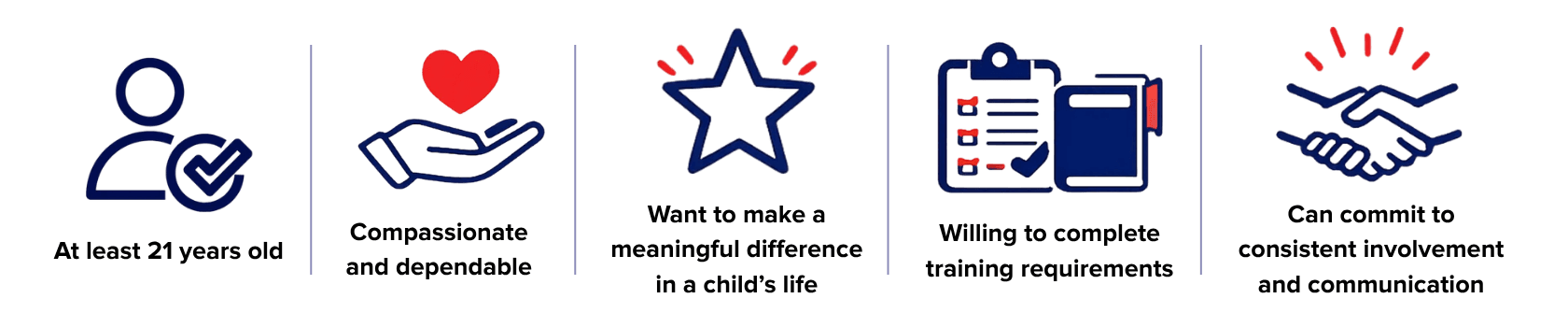
You do not need a background in social work, law, or child welfare to become a CASA advocate. Volunteers come from many different professional and personal backgrounds, but all share a commitment to supporting children during difficult moments in their lives.
CASA advocates are compassionate, dependable, and willing to show up consistently for a child while working alongside professionals involved in the case.
How Do You Become a CASA?
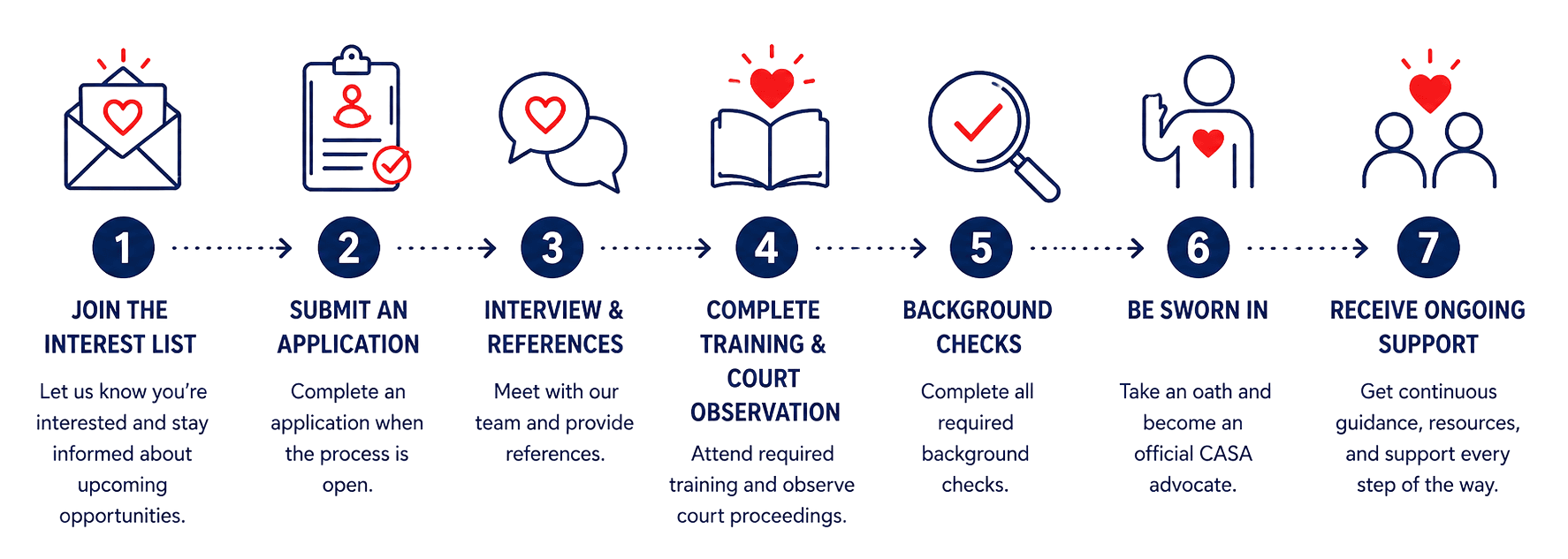
Applications and training sessions are offered based on current volunteer needs. CASA typically offers an evening training session in the fall and a daytime session in the spring, though schedules and class sizes vary.
Training and support continue well beyond the classroom. Throughout their time with CASA, advocates work closely with professional Advocate Supervisors who provide guidance and support every step of the way.
Things to Keep in Mind
Becoming a CASA volunteer is a meaningful commitment. Before being assigned to a child, advocates complete training and screening requirements designed to prepare them for the role and provide a strong understanding of child advocacy, trauma-informed support, and the juvenile court system.
Consistency is one of the greatest gifts a CASA can provide to a child. Through regular visits, dependable communication, and a lasting presence, advocates help children feel supported during times of uncertainty. Understanding the time and dedication involved is an important part of fulfilling our mission.
Things to keep in mind when applying to be a CASA volunteer:
Frequently Asked Questions
-
Who can volunteer?
You! CASA volunteers come from many different professional and personal backgrounds. You do not need experience in child welfare, social work, or the legal system to become a CASA advocate.
Volunteers must be at least 21 years old and willing to complete training, maintain confidentiality, communicate professionally, and remain consistent and dependable for a child throughout the case. -
I am employed full time – can I still volunteer?
Yes. Many CASA advocates work full time while volunteering.
Most advocates spend approximately 10 hours or less per month on their case, though schedules vary depending on the child’s needs and court involvement. Many volunteers are able to complete visits, communication, and case-related responsibilities outside traditional work hours.
Some daytime flexibility may occasionally be needed for court hearings or meetings, but these are typically scheduled in advance and do not occur every month. Being organized, managing your time well, and communicating with your employer can help make the role manageable alongside a full-time schedule.
The largest time commitment is typically the initial 30-hour training. CASA offers evening sessions and some flexibility through self-directed learning opportunities, while still requiring important in-person participation and discussion throughout the training process. -
What are the responsibilities of a CASA Volunteer?
CASA advocates are typically assigned to one family case at a time to represent a child or sibling group involved in the juvenile court system due to abuse or neglect.
Advocates visit the child every 30 days, build relationships, review court and agency records, and communicate with caregivers, caseworkers, and other professionals involved in the child’s life. Using the information they gather, advocates prepare reports for the court that help the judge make informed decisions regarding the child’s well-being, placement, and needs.
CASA advocates also attend court hearings and other meetings connected to the case. Unlike attorneys or caseworkers, CASA advocates focus exclusively on representing the child’s best interests and providing the court with consistent, child-centered insight throughout the case. -
How Much Time is Involved Being a CASA?
CASA advocates are asked to commit to the program for approximately 24 months, as consistency and stability are important for the children served. Before being assigned to a case, volunteers complete approximately 35 hours of training. Most advocates spend between 3–10 hours per month on case-related responsibilities, though time commitments can vary throughout the life of a case.
-
What If I can’t be a CASA? Are there other ways to volunteer?
Absolutely. While becoming a CASA advocate is a unique and meaningful role, there are many other ways to support children and families served by CASA of DuPage County.
Community members can volunteer at events, join event committees, support outreach initiatives, organize donation drives, help raise awareness, and participate in community events throughout the year.
Visit our Ways to Give and Events pages to learn more about additional volunteer and community involvement opportunities. -
How Does a CASA Benefit the Child?
Children involved in the juvenile court system often experience significant change and instability. CASA advocates provide consistent support while helping ensure the child’s needs and best interests remain clearly understood throughout the court process.
Because advocates typically stay involved throughout the life of a case, they may become one of the few stable adults consistently present in a child’s life during a difficult time. -
Will I receive support after training?
Yes. CASA advocates receive ongoing guidance and support throughout their time with the program. Each volunteer works closely with a professional Advocate Supervisor who provides direction, answers questions, and helps advocates navigate the juvenile court process.
Advocates also participate in continuing education opportunities and have access to additional resources, training, and support as needed.
Not ready to become a CASA?
There are many other meaningful ways to support children and families in our community. Whether you volunteer at an event, make a donation, host a fundraiser, or help spread awareness, your support helps children have someone in their corner.